

How price tracking tools work
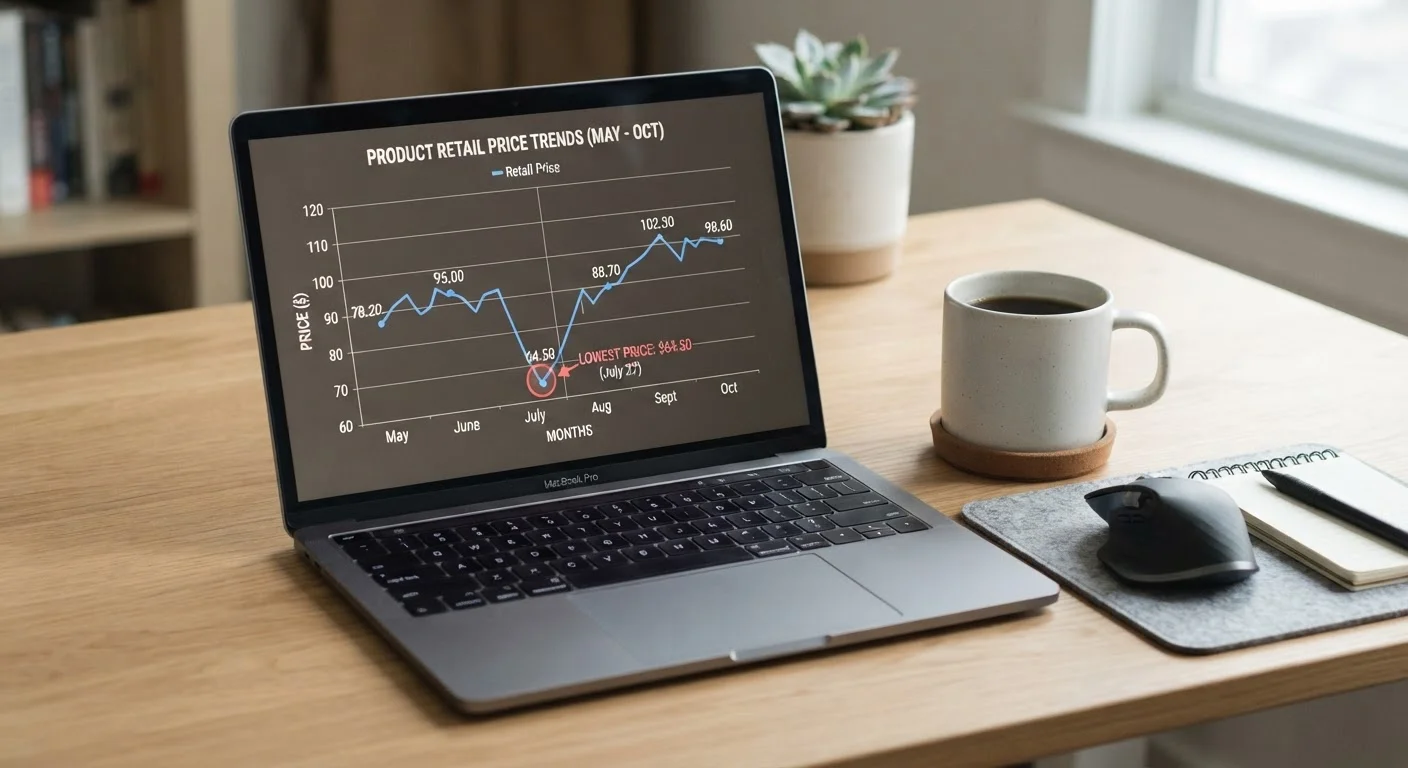
A price tracker is software that visits a product's listing page repeatedly and records the price each time. Over days and weeks, those data points form a line graph showing whether a price has been rising, falling, or staying flat. The tracker stores this history in a database and displays it to you on demand.
Most tools also let you set a target price. When the listed amount drops to that level, the tool sends an alert by email or notification. This removes the need to check manually and reduces the temptation to buy at an arbitrary moment.
The practical effect is that you gain context a single visit to a product page cannot give you. A price tag that reads $149 tells you nothing on its own. A chart showing that product sat at $99 for most of the previous three months tells you something concrete.
Set your target before you check the chart
Decide what price would make a purchase feel reasonable before you look at the history graph. If you set the number after seeing the chart, the chart itself can anchor your expectation upward or downward. A pre-set target keeps the decision grounded in your actual budget rather than in what the data suggests you should want.
Why retailers change prices so often
Large retailers adjust prices continuously based on competitor pricing, inventory levels, demand signals, and promotional calendars. An item can change price multiple times in a single day on some platforms. This is called dynamic pricing, and it means the price you see is not a fixed, stable number but a variable one.
One common pattern worth knowing: prices on certain products rise in the weeks before a major sale event, then fall to the "sale" price during the event. The discount looks significant against the inflated pre-sale price but may be modest or nonexistent compared to what the item cost two months earlier. A price history chart makes this pattern visible immediately.
This connects to a broader point examined in sale season myths that keep shoppers overspending: promotional framing and urgency signals often obscure whether a price is genuinely low.
When timing a purchase actually matters
Price tracking pays off most when the purchase is non-urgent, the item costs enough that a meaningful difference in price is possible, and you have flexibility on timing. A $20 household item with stable pricing probably does not warrant tracking. A $300 appliance or a $500 laptop with a volatile price history is worth watching for weeks or months.
Seasonal patterns are real for some categories. Electronics often see price reductions around major retail holidays. Outdoor gear tends to drop after summer or ski season ends. Air conditioners get cheaper in fall. A year of price history helps confirm whether these patterns hold for a specific product rather than just the category in general.
For everyday grocery spending, price tracking tools are less applicable. Unit price labels on store shelves serve a similar function by letting you compare true cost per unit across package sizes and brands in real time.
Hourly
Frequency some tools check prices
Many price tracking tools poll retailer pages as often as once per hour, meaning the history they capture can reflect intraday price swings as well as longer trends.
30-365 days
Typical price history range available
Depending on the tool and how long a product has been tracked, history windows vary widely; longer windows give more reliable context for seasonal pricing decisions.
Reading a price history chart accurately
A few details determine how much a chart tells you. The time window shown matters most: a 30-day chart may look like the current price is a low point when a 12-month chart would show it is actually above the annual average. Always extend the view as far back as the tool allows before drawing a conclusion.
Watch for data gaps, which appear as flat lines or missing sections. These usually mean the tracker could not retrieve the price during that period, not that the price was steady. A gap near a known sale event is worth noting.
Also consider what "price" the tool is recording. Some track only the base item price; others include shipping. If a product's chart shows a sharp drop but shipping costs jumped at the same time, the total cost may not have changed. Hidden costs inside a sale price covers this in more detail.
Practical limits of price tracking
Price tracking does not guarantee savings. It gives you better information, but the decision still depends on your specific needs, budget, and timing. A lower price two months from now does not help if you need the item today.
Coverage is also uneven. Tools tend to cover major retailers well and smaller or specialty stores poorly. Products sold by third-party sellers on a marketplace can show price histories that mix data from multiple sellers, making the chart harder to interpret. Checking which seller the tracker monitored is worth doing before acting on a chart.
Finally, a focus on price should not crowd out other factors. A product bought at a historical low is not a good deal if it does not fit your actual needs. Combining price history with unit price math and a clear sense of what you need tends to produce better outcomes than chasing the lowest number alone.
Frequently Asked Questions
Price tracking tools read publicly listed prices the same way any browser does. They do not access private accounts or payment data. Always verify any tool's privacy policy before creating an account or installing a browser extension.
It varies by tool and product. Many show 30 to 90 days by default, but some allow you to view up to a year or more. Longer windows are more reliable for spotting genuine seasonal lows versus short-term fluctuations.
Most tools focus on large, well-known retailers. Coverage for smaller or specialty stores is often limited. If a retailer blocks automated price checks, the tracker may show gaps in its history.
Most price tracking tools target electronics, appliances, and general merchandise rather than grocery items, which change price more frequently and vary by store location. For groceries, unit pricing is a more practical comparison method.
A price alert is a notification sent by a tracking tool when a product's price drops to or below a threshold you set. You receive an email or push notification rather than having to check manually every day.
Not necessarily. Shipping costs, return restrictions, or a shorter warranty can offset a lower sticker price. Checking <a href="/smart-shopping-tips/the-hidden-costs-inside-a-great-looking-sale-price">the hidden costs inside a sale price</a> before buying gives a fuller picture.
The content provided on our blog site traverses numerous categories, offering readers valuable and practical information. Readers can use the editorial team’s research and data to gain more insights into their topics of interest. However, they are requested not to treat the articles as conclusive. The website team cannot be held responsible for differences in data or inaccuracies found across other platforms. Please also note that the site might also miss out on various schemes and offers available that the readers may find more beneficial than the ones we cover.