

Why seasonal planning unlocks more free fun
Free family activities are everywhere, but they are not evenly distributed across the calendar. Many programs, festivals, and park events run only at specific times of year, so families who plan seasonally find far more options than those searching week to week. A quick scan of your city's parks and recreation calendar, your county library website, and the National Park Service's fee-free day schedule at the start of each season can fill a month's worth of outings before you spend a single dollar.
It also pays to know what "free" actually means before you pack the car. Parking fees, suggested donations, and registration cutoffs can quietly change the math. Learn what to watch for before you plan so the day goes smoothly. With those checks in place, seasonal planning becomes a genuine tool for stretching the family budget.
Sign up for your county parks and recreation department's email newsletter at the start of each season. Free event registrations often fill within days of being posted, and an email alert is the fastest way to catch them.
Popular free programs, especially summer day camps and ticketed outdoor movie nights, have limited spots that disappear quickly. Early notice is the practical advantage families need.
Ask your public library specifically about a Museum Adventure Pass or similar borrowing program. Dozens of library systems nationwide let cardholders check out free day passes to local museums, nature centers, and cultural sites.
These programs are underused because they are not prominently advertised. A single conversation with a librarian can unlock free admission to venues that normally charge $15 to $20 per person.
Winter: cold-weather activities that cost nothing
Winter pushes many families indoors, but it opens up free options that other seasons do not. Public libraries across every region ramp up storytimes, STEM workshops, and craft events in January and February to serve families who are looking for structured activities without the weather risk. Most require no registration and no fee.
Outdoors, urban and suburban parks with sledding hills are free to use in most cities, and state forests in the Northeast and Midwest maintain groomed cross-country ski trails that are open at no charge (bring your own equipment or check for library gear-lending programs, which some counties now run). In the South and Southwest, winter is prime hiking season: temperatures that feel brutal in July are comfortable in December, making trails in places like central Texas and southern Arizona accessible to young children who struggle in summer heat.
Many museums and science centers schedule free community days in winter months to boost attendance. Dates vary by institution, so check each venue's website directly rather than relying on third-party aggregators, which are often out of date.
Spring: outdoor exploration and community events
Spring is the season when local governments spend their parks budgets on public programming. Earth Day events in April frequently include free guided nature walks, native plant giveaways, and outdoor science demonstrations at parks, botanical gardens, and nature centers. Memorial Day weekend often brings free outdoor concerts and community festivals that are genuinely admission-free, though food vendors are on-site if the budget allows for extras.
Birding is one of the most family-friendly free activities spring offers. The Cornell Lab of Ornithology's eBird app is free to download and turns a neighborhood walk into a structured observation exercise that kids find surprisingly engaging. No binoculars are required to start, though a library's gear-lending program may have a pair available.
State and national parks see some of their highest traffic in spring, and the National Park Service designates several fee-free days during this period. See how the fee-free day program works and what to know before you go. For families who visit multiple parks, the Every Kid Outdoors program provides free annual passes to fourth-graders and their families, valid at hundreds of federal lands.
Summer: libraries, parks, and public programs
Summer is the richest season for structured free programming. The American Library Association's Summer Reading Program runs at thousands of public libraries nationwide, and while most people associate it with reading logs for kids, the actual offerings go much further. Free STEM workshops, author visits, movie screenings, and maker activities are standard at mid-size and large library systems. Explore the full range of free library programming available to kids and families.
City parks departments run free day camps, outdoor movie nights, and splash pad programming in most metro areas from June through August. Many of these programs accept drop-ins with no advance registration. National parks are busiest in summer but still offer free ranger-led programs including junior ranger activities that children complete at their own pace using free booklets available at visitor centers.
Families in the Midwest and Mid-Atlantic can take advantage of free outdoor concerts at state fairgrounds, civic plazas, and amphitheaters. Many cities post their full summer concert schedule by late April, which makes planning ahead straightforward.
Fall: harvests, trails, and free cultural days
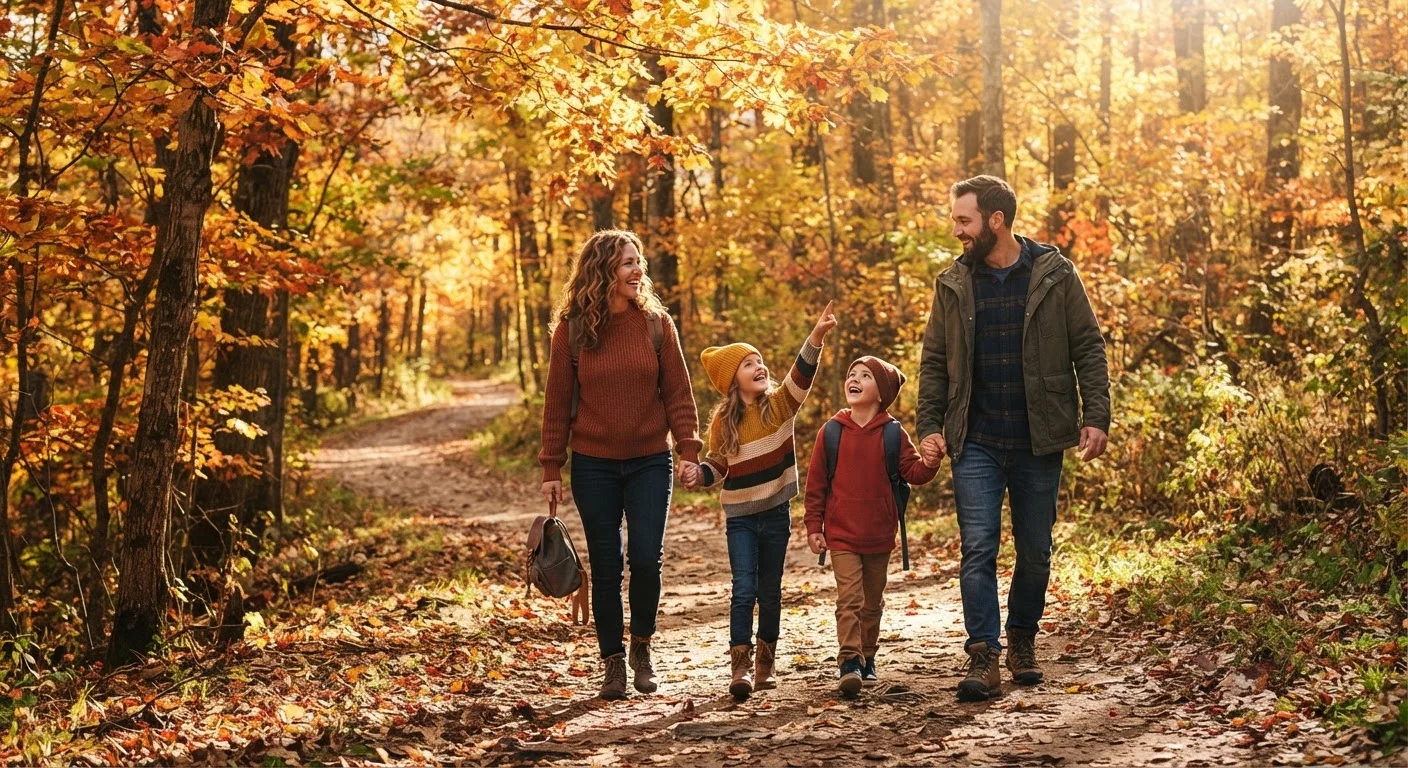
Fall brings two reliable categories of free activity: outdoor exploration at peak color and cultural institutions offering free admission days before their quieter off-season begins. Many art museums, history museums, and science centers schedule free Saturdays or reduced-price community days in September and October. A reference guide to programs that reduce or eliminate entrance fees at parks and museums covers how to find these systematically.
Hiking in fall is free everywhere there is public land, and the color payoff is highest in the Northeast, upper Midwest, and Mountain West. State forest maps are available free from most state DNR websites. Many counties also maintain free trail maps through their parks departments, downloadable as PDFs.
Public harvest festivals at farms sometimes charge admission, but many towns host free street-level harvest fairs with no gate fee. Check your municipality's event calendar in August to identify which local festivals are genuinely free before making plans.
Regional notes: matching activities to where you live
Geography changes which activities are realistic. Families in the Pacific Northwest have free access to state beaches, old-growth forest trails, and salmon-viewing sites that are available most of the year. Gulf Coast families can use public beach access points for free throughout fall and winter when northern families cannot. Great Plains families have wide open state park systems that charge no day-use fees in several states, including Kansas and Nebraska.
Urban families often have the densest concentration of free options: free zoos (San Diego's Balboa Park, the National Zoo in Washington D.C., and the Lincoln Park Zoo in Chicago are fully free to enter), free public art installations, and extensive library programming. Rural families may need to drive farther between options, but state and national forests often provide the most expansive free outdoor space available anywhere in the country.
Whatever your region, use a practical checklist to plan a zero-cost family outing without surprises. Confirming admission policies, parking costs, and registration requirements the day before turns a good idea into a great day out.
The content provided on our blog site traverses numerous categories, offering readers valuable and practical information. Readers can use the editorial team’s research and data to gain more insights into their topics of interest. However, they are requested not to treat the articles as conclusive. The website team cannot be held responsible for differences in data or inaccuracies found across other platforms. Please also note that the site might also miss out on various schemes and offers available that the readers may find more beneficial than the ones we cover.