

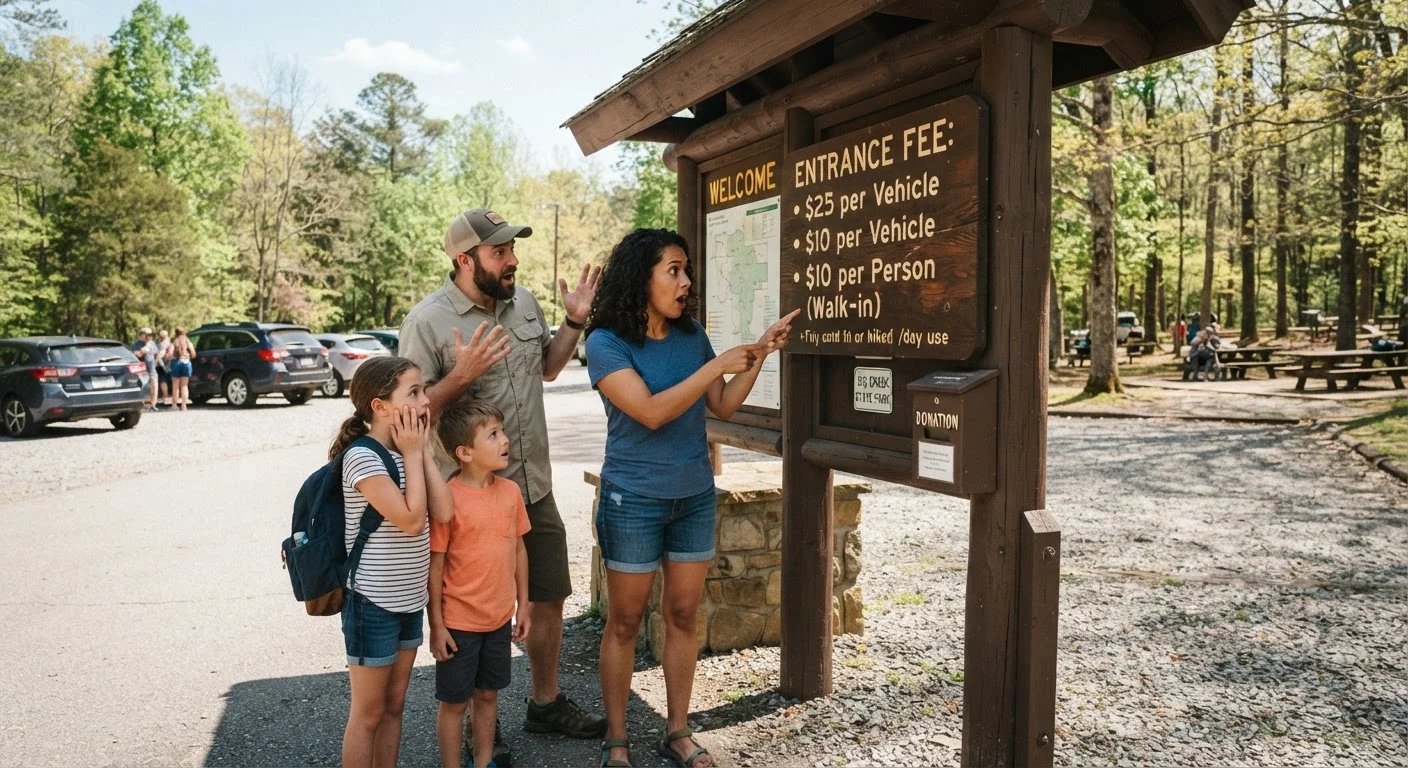
How 'free' gets more expensive than it looks
A free outing sounds simple: no tickets, no cost, just show up. In practice, the gap between 'free admission' and a zero-dollar day is often wider than families expect. Parking charges, on-site food prices, fuel costs, and membership requirements quietly pile up, and a trip that started with no entry fee can finish well above what a paid activity would have cost.
The good news is that most of these costs are predictable and avoidable once you know where they tend to hide. The mistakes below are the ones that catch families most often, along with practical ways to sidestep each one. For a broader look at how to build more consistently affordable outings into your year, the seasonal free activities guide covers accessible options across every US region.
Assuming 'free admission' means the full outing costs nothing.
Why it happens: The word 'free' draws attention, and families reasonably take it at face value without reading the fine print about parking, food, or add-on experiences.
Not checking whether a free event requires advance registration or a membership.
Why it happens: Many museum free-day programs and community events are promoted broadly but are limited to residents, cardholders, or pre-registered attendees, details that don't always appear in the headline.
Ignoring age, residency, or group size restrictions that limit who qualifies.
Why it happens: A venue may advertise free entry for children under 12 or for local residents only, but that detail gets buried below the headline in promotional materials.
Underestimating how far away the free activity actually is.
Why it happens: Families focus on the cost of the event itself and forget that a 90-minute round trip adds fuel costs, wear on the vehicle, and hours of the day that might be spent more productively closer to home.
Arriving without checking whether parking is free or limited.
Why it happens: Families research admission prices but rarely look up parking details, and many popular parks or urban venues charge $15 to $25 per day in lots near the entrance.
Planning a visit on a date when the free policy does not apply.
Why it happens: Free days at national parks, museums, and cultural sites rotate throughout the year and are not always on weekends. Families sometimes discover at the gate that the free day was last weekend.
How to protect your budget before you leave the house
A little preparation at home eliminates most of the hidden costs that inflate free-day outings. Run through the practical checklist for planning a free family day before any outing: it covers admission policies, parking, packing, and timing in one place.
For food, packing a bag with snacks and drinks is the single most reliable way to avoid the markup at venue concession stands. For transit, apps like Google Maps or your city's transit authority site can surface free or low-cost routes that bypass paid parking entirely. And if your family travels farther afield, the same budget habits that protect you on a local free day apply to bigger trips too. The patterns behind family vacation overspending piece breaks down where travel budgets most often slip, and much of it starts with the same assumptions that make a local 'free' day more expensive than expected.
Verify details directly with the venue
Free-day schedules, parking fees, and age restrictions can change without much notice. Always check the venue's official website or call ahead before your trip. Information on third-party event listings can be out of date, and what was free last month may no longer be.
Finally, keep a running note on your phone with confirmed free dates, parking logistics, and any registration steps for events you plan to attend. Two minutes of prep for each outing is a fair trade for a day that actually costs what you planned.
The content provided on our blog site traverses numerous categories, offering readers valuable and practical information. Readers can use the editorial team’s research and data to gain more insights into their topics of interest. However, they are requested not to treat the articles as conclusive. The website team cannot be held responsible for differences in data or inaccuracies found across other platforms. Please also note that the site might also miss out on various schemes and offers available that the readers may find more beneficial than the ones we cover.