

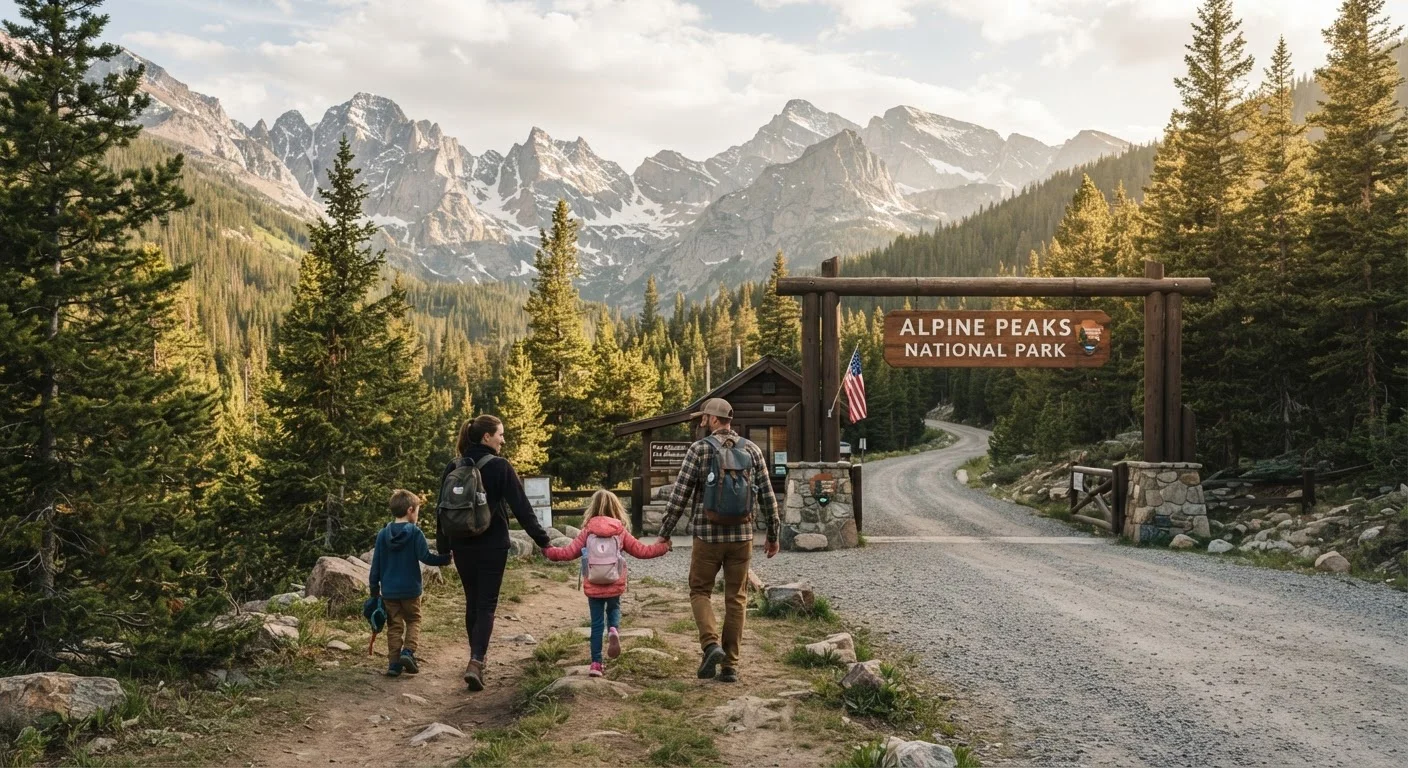
The America the Beautiful pass and who qualifies
The America the Beautiful pass, formally called the Interagency Annual Pass, costs $80 per year and covers entrance fees at more than 2,000 federal recreation sites managed by the National Park Service, the U.S. Forest Service, the Bureau of Land Management, the U.S. Fish and Wildlife Service, and the Bureau of Reclamation. One pass admits the pass holder and up to three additional adults; children under 16 enter free at all NPS sites regardless of the pass.
Several free versions exist and are worth knowing before purchasing the paid version. U.S. military members and their dependents qualify for a free annual pass. U.S. citizens or permanent residents who are fourth graders can get a free pass through the Every Kid Outdoors program, valid for the entire school year and through the following summer. U.S. citizens or permanent residents aged 62 or older pay $20 for a lifetime Senior Pass (or $80 annually). U.S. citizens with permanent disabilities can obtain a free Access Pass. Volunteers who complete 250 service hours with a federal agency also qualify for a free pass.
The pass does not cover fees charged by concessionaires, parking where a separate parking fee applies, or camping. State and local parks operate entirely separate fee structures, so the federal pass has no effect at those sites.
Free admission days at national parks and museums
The National Park Service designates several fee-free days each year, typically covering Martin Luther King Jr. Day, the first day of National Park Week, Juneteenth, the anniversary of the Great American Outdoors Act, and Veterans Day. On those dates, entrance fees are waived at all NPS sites that normally charge. Camping, tours, and parking fees still apply.
The Smithsonian Institution's 19 Washington, D.C., museums and galleries are permanently free. No ticket purchase is required, though timed entry passes are sometimes needed for high-traffic locations. Many science and natural history museums affiliated with universities operate on a permanent free or suggested-donation model as well.
A program called Museum Day, organized annually by Smithsonian magazine, offers one-day free admission at hundreds of participating museums across the country. Participants register online and download a pass before visiting. The list of participating venues changes each year, so checking the program's official site close to the event date is necessary to confirm which locations are included in a given year.
Local library systems in many cities issue free museum passes that cardholders can borrow, covering admission for up to four visitors at partnering institutions. Availability varies by library district and demand, and passes often must be reserved in advance. Parking and transportation costs at urban museums can offset the savings, so it is worth factoring those in before planning a trip.
Reciprocal membership networks and other programs
Many science centers, zoos, aquariums, and botanical gardens belong to reciprocal membership networks. A paid membership at one participating institution grants free or reduced admission at others in the network. The most common networks include the Association of Science-Technology Centers (ASTC) Passport Program, the American Horticultural Society's Reciprocal Admissions Program, the American Zoo and Aquarium Association (AZA) reciprocal program, and the North American Reciprocal Museum (NARM) association. Coverage rules vary: ASTC, for example, excludes sites within 90 miles of the purchasing institution for certain member categories.
The LINKS program and the Reciprocal Admissions Program managed by various children's museum networks offer similar arrangements for family-oriented venues. Before purchasing any membership, it is practical to map out which institutions in your travel region participate, then calculate whether the combined value of admission savings exceeds the membership fee across planned visits.
Some state arts councils run separate free admission programs for state residents, particularly at state-funded art museums. These programs are administered at the state level and vary considerably in scope. Checking the website of the specific museum or the relevant state cultural agency is the most reliable way to confirm current eligibility and dates.
For families planning multiple visits over a year, the full range of seasonal free options across all regions can help map out a low-cost activity calendar. A pre-trip checklist is useful for confirming admission policies, pass validity, and any registration steps before leaving home, since policies change and passes require advance verification in some programs.
Admission policies, pass eligibility requirements, and participating institutions change periodically. Verify current details directly with the relevant federal agency, institution, or program before traveling.
The content provided on our blog site traverses numerous categories, offering readers valuable and practical information. Readers can use the editorial team’s research and data to gain more insights into their topics of interest. However, they are requested not to treat the articles as conclusive. The website team cannot be held responsible for differences in data or inaccuracies found across other platforms. Please also note that the site might also miss out on various schemes and offers available that the readers may find more beneficial than the ones we cover.