

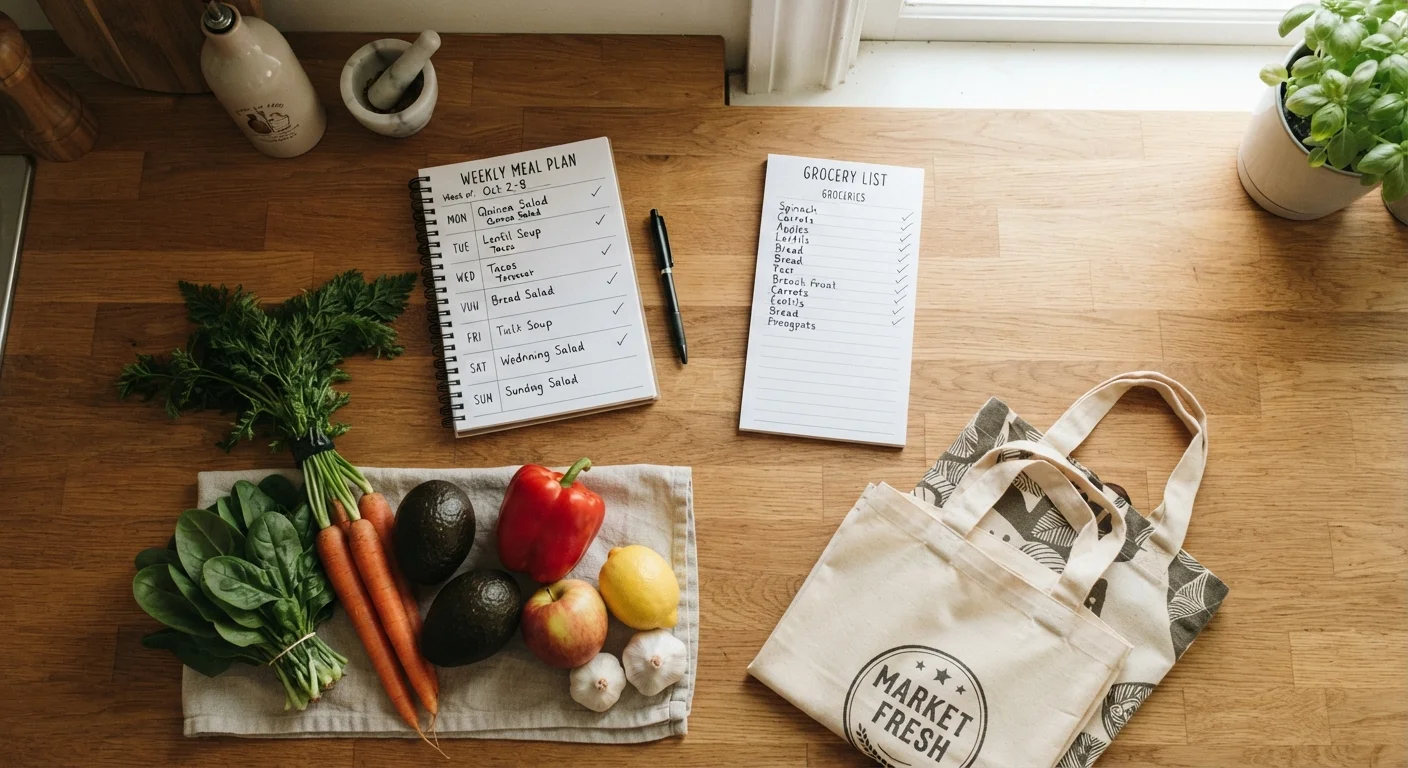
Option A
Meal Planning
The structured, list-driven approach to grocery spending.
Best for: Families who want predictable weekly food costs and less food waste.
Option B
Spontaneous Shopping
The flexible, as-needed approach to buying groceries.
Best for: Households comfortable with variable spending who shop around sales and markdowns.
Where the money actually goes
The average American household spent roughly $475 per month on groceries in 2023, according to the U.S. Bureau of Labor Statistics Consumer Expenditure Survey. For families, that figure climbs higher. What the data does not break down is how much of that spending was intentional versus reactive. That gap is where the real cost difference between meal planning and spontaneous shopping lives.
Spontaneous shopping creates two specific cost drivers: unplanned items added to the cart and food that gets bought but never eaten. Research published by the USDA estimates that American households waste between 30 and 40 percent of the food supply, and a significant portion of that waste happens at the consumer level. When you buy without a plan, you are more likely to overbuy produce, duplicate pantry staples you already have, and purchase convenience items because you have no prepared alternative.
Meal planning addresses both problems directly. A grocery list built around a weekly menu means you buy what you will use. It also gives you a ceiling: once the list is done, the trip has a defined scope. For a deeper look at how food costs fit into your overall household picture, see where your household money actually goes.
| Criterion | Meal Planning | Spontaneous Shopping |
|---|---|---|
| Average trips per week | 1 to 2 planned trips | 3 to 5 smaller trips |
| Impulse purchase risk | Low (list-driven) | High (no defined scope) |
| Food waste rate | Lower (bought to use) | Higher (overbuy common) |
| Flexibility to use sales | Moderate (plan around sales) | High (react in-store) |
| Time investment | 20-30 min planning upfront | More cumulative trip time |
| Upfront cash outlay | Higher per trip | Lower per trip, more trips |
| Monthly cost (typical family) | Generally lower overall | Generally higher overall |
The hidden costs of flexibility
Spontaneous shopping carries costs that do not show up on any single receipt. The most common is the "I'll figure it out" effect: arriving at the store without a plan tends to result in more frequent trips, more convenience purchases, and a higher rate of food spoilage.
Frequent small trips also add up. Each unplanned visit to the store produces, on average, one to three unplanned purchases, according to consumer research by the Food Marketing Institute. Over a month, those add-on items can total more than a full planned shopping trip. There is also a time cost: multiple short trips take longer cumulatively than one organized weekly trip.
Spontaneous shoppers sometimes argue they save money by buying only what they need right now. This works when the household is genuinely buying small quantities and consuming everything. In practice, however, the convenience premium on ready-made items and the habit of buying without checking pantry inventory usually erases those savings.
What meal planning actually costs you
Meal planning is not free of downsides. The upfront time investment is real: building a weekly plan, checking inventory, and writing a structured list takes 20 to 30 minutes most families do not feel they have. Plans also go wrong. Work runs late, kids refuse the planned dinner, or a family member gets sick. Food bought for a specific recipe can spoil if the meal does not happen.
Rigid planning can also mean missing genuine deals. If your plan calls for chicken this week but pork tenderloin is heavily marked down, a locked-in list means you pay full price for the planned item. The fix is building your plan around sales rather than before checking them: look at your store's weekly circular first, then plan meals around what is discounted. This approach captures most of the cost control of planning while staying responsive to actual prices.
For practical guidance on structuring a weekly food plan that stays within a set budget, this family meal planning system walks through the process step by step. And if you are deciding whether to stock up on sale items in bulk, bulk buying is not always the cheaper choice covers when the math works and when it does not.
30-40%
Food wasted at consumer level
The USDA estimates American consumers waste between 30 and 40 percent of the food supply, much of it from unplanned purchasing.
$475/mo
Average household grocery spend
The U.S. Bureau of Labor Statistics Consumer Expenditure Survey reported an average monthly grocery spend of roughly $475 per household in 2023.
1-3
Unplanned items added per unplanned trip
Consumer research by the Food Marketing Institute found that unplanned store visits typically result in one to three additional unplanned purchases.
Which approach saves more: the honest answer
Meal planning saves more for most households most of the time, but the margin depends on how well the plan is executed. A planner who buys for seven dinners and ends up throwing out three nights worth of food has not saved anything over someone who bought for four dinners and used all of them. The plan itself is not the savings mechanism; reduced waste and fewer impulse purchases are.
Spontaneous shopping can be cost-effective for small households with highly variable schedules, provided they genuinely buy only what they will use within a day or two and resist convenience-item substitutions. For most families of three or more, the evidence consistently points toward planning as the lower-cost default.
The most practical middle ground is a loose plan: decide on five to six meals for the week, write a list, but leave one or two nights open for leftovers or whatever proteins are marked down when you arrive. This removes the rigidity that causes waste while keeping the list discipline that prevents impulse spending. For building out a broader household shopping budget, a family shopping budget framework provides a category-by-category starting point.
The content provided on our blog site traverses numerous categories, offering readers valuable and practical information. Readers can use the editorial team’s research and data to gain more insights into their topics of interest. However, they are requested not to treat the articles as conclusive. The website team cannot be held responsible for differences in data or inaccuracies found across other platforms. Please also note that the site might also miss out on various schemes and offers available that the readers may find more beneficial than the ones we cover.