

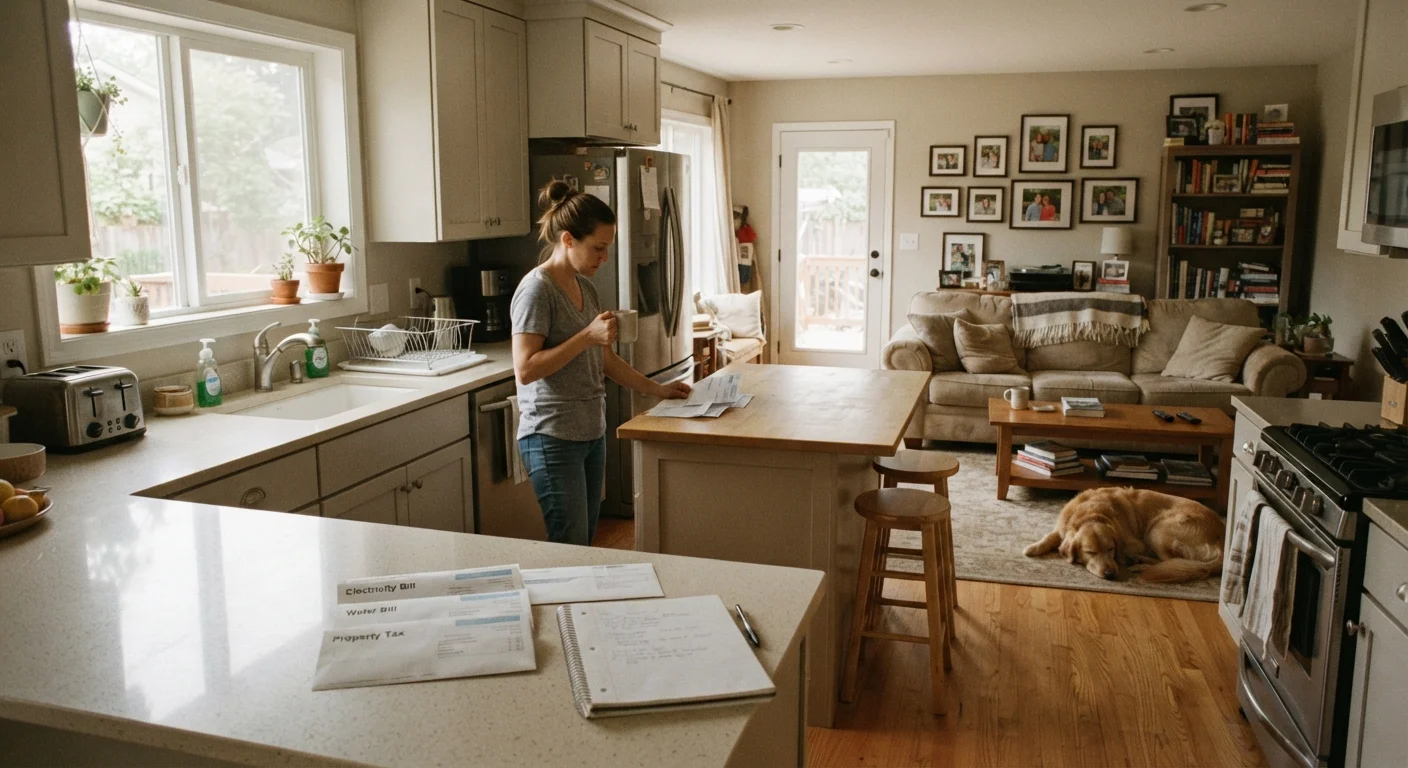
The full picture most households miss
Most people can name their rent or mortgage payment without hesitation. Far fewer can say with confidence what their home actually costs each month in total. The gap between those two numbers is where household budgets quietly break down.
Running a home involves several distinct spending categories. Understanding each one separately makes it possible to spot where money is going, where it can be reduced, and how to plan for costs that do not arrive on a regular schedule.
This article breaks down the main categories, explains why each one matters, and points to resources that can help you take control of the full picture. For a structured approach to tracking all of it, see Building a Household Budget From Scratch, which covers income tracking and expense categories step by step.
1-2%
Of home value recommended annually for maintenance
A widely cited rule of thumb among housing and personal finance educators for setting aside maintenance and repair funds each year.
$2,000+
Average annual utility cost per U.S. household
The U.S. Energy Information Administration has reported average residential energy expenditures in this range, though costs vary widely by region and home size.
30%
Of household income, the traditional housing cost ceiling
Housing counselors and personal finance guidelines have long used 30 percent of gross income as a benchmark for total housing costs, though this varies by local market.
Housing payments: the foundation
Rent or mortgage is the largest single line item for most families. For homeowners, the mortgage payment itself is just the start. Property taxes, homeowner's insurance, and if applicable, private mortgage insurance (PMI) all add to the monthly total. Homeowners in communities with a homeowners association (HOA) pay dues on top of that.
Renters face their own version of this. Monthly rent does not typically cover renter's insurance, which is a modest but necessary cost that protects personal belongings. Some rentals also pass through costs for water, trash, or parking that are easy to treat as small and separate but belong in the housing total.
The common mistake is treating the mortgage or rent payment as the housing cost, when it is only part of it.
Utilities: the variable middle
Utility costs are where household spending becomes unpredictable. Electricity, natural gas, water, sewer, and trash collection form the core. Internet and phone service are now standard operating expenses for most households as well.
What makes utilities difficult to budget is that they shift with seasons, habits, and home efficiency. A drafty home costs more to heat in winter. An old water heater uses more energy than a newer model. Running the clothes dryer at peak rate hours on a time-of-use electricity plan costs more than running it at off-peak times.
Low-cost home upgrades like weatherstripping and LED lighting directly affect what shows up on utility bills each month. The relationship between the physical state of a home and its utility costs is direct.
Maintenance and repairs: the unpredictable third
Maintenance is the category most families budget too little for, or skip entirely, until something breaks. The 1-to-2-percent-of-home-value guideline exists because homes require continuous upkeep: HVAC filters, caulking, roof inspections, gutter clearing, water heater flushing, and dozens of smaller tasks throughout the year.
Deferred maintenance is expensive. A small roof leak ignored for a season can become a mold problem that costs far more to fix. A furnace never serviced is more likely to fail in the middle of winter, when repair appointments are hard to schedule and emergency rates apply.
The monthly home maintenance checklist breaks down which tasks belong on a regular schedule so nothing is missed. Staying ahead of routine maintenance is one of the most reliable ways to avoid large, unexpected repair bills.
Set up a dedicated maintenance fund
Consider opening a separate savings account specifically for home maintenance and repairs. Deposit a fixed amount each month based on your 1-to-2-percent annual estimate divided by 12. When a repair arises, the money is ready and does not disrupt your regular household budget.
The smaller costs that compound
Below the major categories sits a layer of smaller recurring expenses that most households underestimate. Cleaning supplies, paper goods, light bulbs, and batteries are purchased so routinely they rarely get counted. Subscription services and memberships are billed monthly or annually and can become invisible once the novelty fades.
Convenience spending is another factor. Takeout ordered because cooking felt like too much, a delivery fee paid for a single small item, an expedited shipping charge: individually small, collectively significant. Small spending traps covers this pattern in detail, including why it happens and what to watch for.
Tracking every household purchase for a single month, including the small ones, regularly shows families a total that is higher than they expected. That number is the starting point for any realistic budget. For a broader look at everyday routines that cost more than they appear to, these common household habits are worth reviewing alongside your own spending record.
Frequently Asked Questions
Running a home includes housing payments (rent or mortgage), utilities such as electricity, gas, and water, home insurance, property taxes if you own, regular maintenance, and periodic repairs or appliance replacements. Groceries, household supplies, and internet service are also standard operating costs for most families.
A widely cited guideline is to set aside 1 to 2 percent of your home's value each year for maintenance and repairs. On a $250,000 home, that is $2,500 to $5,000 annually. Older homes and those in harsh climates may need more. This is a general estimate, not a guarantee, and actual costs will vary.
Utility costs depend on home size, local climate, the age of appliances and HVAC systems, insulation quality, and daily habits like thermostat settings and water use. Two similar-sized homes in different climates can have utility bills that differ by hundreds of dollars per month.
Yes. Commonly overlooked costs include pest control, gutter cleaning, smoke detector battery replacements, water heater servicing, and seasonal yard work. Membership fees, subscriptions, and convenience services also accumulate quietly. Tracking every recurring charge for 30 days often reveals expenses families did not realize they were paying.
Add up all fixed monthly bills, then estimate variable costs using past statements as a guide. Divide annual expenses (like insurance premiums or HVAC tune-ups) by 12 and include that monthly fraction. The result gives a truer monthly number than most families initially expect.
The content provided on our blog site traverses numerous categories, offering readers valuable and practical information. Readers can use the editorial team’s research and data to gain more insights into their topics of interest. However, they are requested not to treat the articles as conclusive. The website team cannot be held responsible for differences in data or inaccuracies found across other platforms. Please also note that the site might also miss out on various schemes and offers available that the readers may find more beneficial than the ones we cover.