

Why these habits go unnoticed
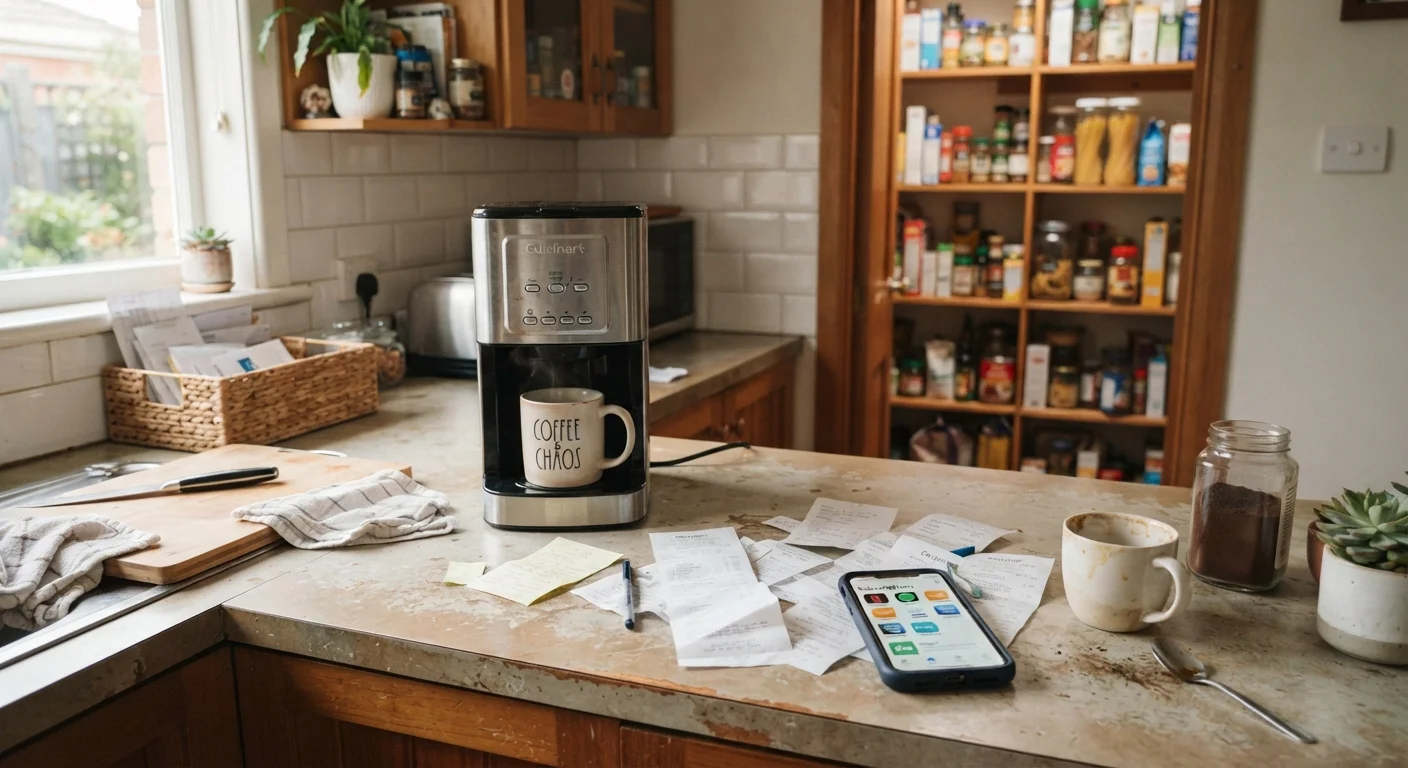
The spending habits most likely to drain a household budget are rarely dramatic. They show up as $8 here, $14 there, a slightly higher utility bill, a grocery receipt that always runs a bit over. None of it triggers alarm, which is exactly why it continues.
The common thread across most of these habits is invisibility. Either the cost is small enough to feel irrelevant, or it recurs automatically without requiring a decision each time. Once a habit is automatic, it stops getting scrutinized. That is when it becomes expensive.
This is also why periodic, deliberate review matters more than willpower in the moment. You cannot catch a phantom power draw or a forgotten subscription by being more careful at the store. You catch them by stepping back and looking at the full picture. For a broader view of where household money actually goes, see where your money actually goes.
Leaving electronics and appliances plugged in when not in use.
Why it happens: Most people assume a device only draws power when it is on. In reality, many devices draw a small but continuous current in standby mode, a phenomenon sometimes called phantom load or vampire power.
Paying recurring subscription fees for services that rarely get used.
Why it happens: Free trials convert to paid plans automatically, and canceling feels like a task to handle later. Over months, several low-cost subscriptions accumulate into a meaningful monthly line item.
Grocery shopping without a list or a rough meal plan for the week.
Why it happens: Time pressure and habit lead many shoppers to head to the store without preparation. Without a plan, it is easy to overbuy perishables and make duplicate purchases of pantry staples already at home.
Paying convenience fees on routine bill payments and delivery orders without noticing.
Why it happens: Many utility portals, rent platforms, and food delivery apps add a processing or service fee at checkout. These fees appear small per transaction but repeat every billing cycle.
Skipping minor home maintenance until a small problem becomes a repair.
Why it happens: Maintenance tasks feel optional when nothing has visibly broken. Many households put them off indefinitely, not realizing that small issues, like a slow drain or a loose weatherstrip, quietly worsen and get more expensive.
Running appliances like dishwashers, washing machines, and dryers with partial loads.
Why it happens: Convenience drives the behavior. Waiting for a full load feels unnecessary when the appliance is available now.
Building habits that work against the drain
Small charges compound over a full year
A $12 monthly subscription you forgot about costs $144 by year's end. Three of those total $432 before you notice. Auditing recurring charges once every few months is one of the most direct ways to recover money that is already leaving your account.
Correcting these habits does not require a strict budget overhaul. Most of the fixes involve a small amount of setup time that pays off repeatedly. A power strip installed once keeps working. A quarterly subscription review takes 20 minutes. A shopping list written before leaving the house costs nothing.
The complete guide to building lasting savings habits covers how to stack these changes in a way that feels manageable rather than overwhelming. And if utility bills are a particular concern, habits that make a measurable difference on utility bills goes deeper on the specific changes with the most practical impact.
Up to $200
Annual cost of phantom power per household
The U.S. Department of Energy estimates that standby power from idle electronics can account for 10% or more of a home's electricity bill.
30-40%
Food Americans waste at the household level
The USDA estimates that American households waste roughly 30 to 40 percent of the food supply, much of it traceable to unplanned shopping and poor pantry visibility.
$288+
Median annual household subscription spending
Consumer spending research consistently finds that households underestimate their monthly subscription total by a wide margin when asked to recall charges from memory.
The habits on this list are common precisely because they do not feel like mistakes while they are happening. Recognizing the pattern is the first step to spending less without giving anything up.
The content provided on our blog site traverses numerous categories, offering readers valuable and practical information. Readers can use the editorial team’s research and data to gain more insights into their topics of interest. However, they are requested not to treat the articles as conclusive. The website team cannot be held responsible for differences in data or inaccuracies found across other platforms. Please also note that the site might also miss out on various schemes and offers available that the readers may find more beneficial than the ones we cover.