

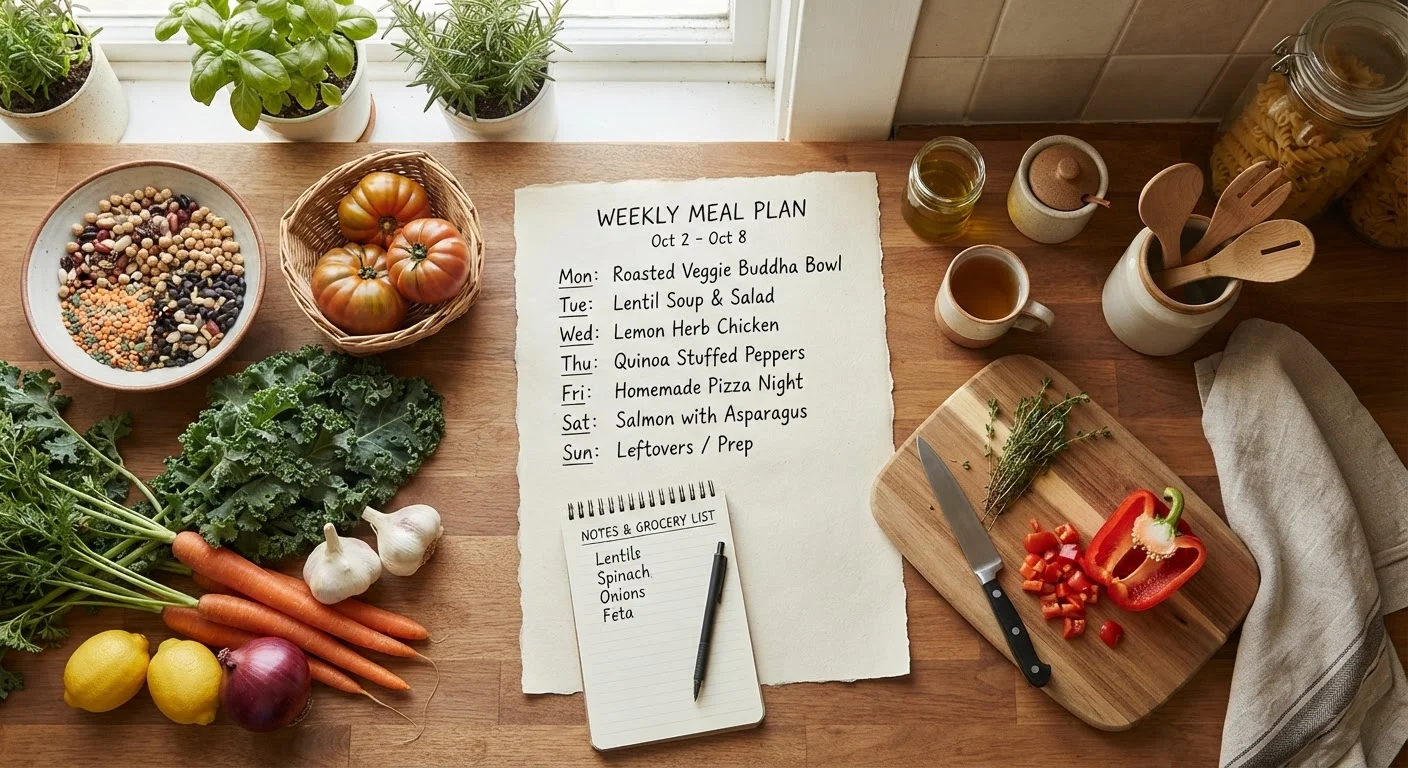
Why a system beats a list
A grocery list tells you what to buy. A meal planning system tells you why, and that distinction matters when money is tight. Without a plan, most families spend more than they intend to, waste food they forgot to use, and end up ordering takeout mid-week because dinner wasn't thought through. For a deeper look at how unplanned shopping compares in real cost, see how planned versus spontaneous shopping stacks up.
The system described here takes about 30 to 60 minutes to set up each week. Once the habit is in place, most families find it faster because the framework stays the same and only the specifics change.
Start with a two-week rotation
New planners often feel pressure to invent seven entirely new meals every week. Instead, build a set of 10 to 14 dinners your family already likes and rotate through them. This keeps shopping patterns predictable and cuts the time you spend deciding what to cook.
If you want to connect this to your broader household budget, the family budget walkthrough is a good starting point for setting your grocery category limit before you plan meals.
What you need before you start
Before writing a single meal on paper, gather two things: a clear weekly grocery budget and a current inventory of what is already in your pantry, refrigerator, and freezer.
What you will need
The inventory step is the one most families skip, and it is where money gets wasted. Buying a second can of tomatoes because you forgot the first one is a small loss; doing it every week adds up. A quick five-minute scan of your shelves before planning prevents this.
Your grocery budget should be a firm number, not a rough guess. The weekly grocery budget guide covers how families set realistic targets based on household size and income.
How to build your weekly meal plan
Follow these steps in order. They move from the big picture down to the shopping list so nothing falls through.
Check your inventory
Go through your pantry, refrigerator, and freezer and write down what needs to be used soon. Prioritize items with the nearest expiration dates or anything that has been sitting for more than a week. These become the starting point for your meals, not the store.
Set your meal count
Decide how many dinners, lunches, and breakfasts you need to cover. Account for nights when family members eat away from home or when leftovers will carry a meal. Planning for 14 meals when you only need 10 wastes food and money.
Check store sales and seasonal produce
Look at your store's weekly circular, either in print or online, before choosing meals. Build at least two or three dinners around whatever protein or produce is on sale that week. Seasonal vegetables are almost always cheaper than out-of-season ones, so note what is currently in season in your region.
Choose meals that share ingredients
Pick recipes that use overlapping ingredients to reduce waste and stretch your budget. If you buy a bunch of celery for a soup, plan a second dish that uses the rest. A half can of coconut milk left from a curry can go into a rice dish. Ingredient overlap is one of the most effective cost controls in meal planning.
Schedule a batch cook session
Assign one day, often Sunday or the day before your busiest stretch, to prep ingredients or cook base components in advance. Cook a large pot of grains, roast a tray of vegetables, or portion proteins. This reduces the time and effort needed on weeknights and makes it less likely that your family will default to expensive convenience options when tired.
Write your shopping list by store section
Organize your list by store section: produce, dairy, meat, dry goods, frozen. This reduces backtracking and limits the time you spend near items not on your list. Cross off anything already in your inventory that you do not need to restock.
Keeping costs low after the plan is set
The plan is only as effective as the shopping trip that follows it. A few habits protect the budget at the store and through the week.
Buy proteins in larger quantities when the price per pound is lower, and freeze portions you won't use within two days. Dry beans, lentils, and canned fish cost less per serving than most fresh or frozen proteins and keep for months. Stretching one protein across two meals, such as a roasted chicken on Monday and a chicken soup on Wednesday using the carcass and leftovers, brings the effective cost per meal down further.
Watch unit prices rather than package prices. A larger bag of rice or oats usually costs less per ounce than a smaller one, but this only saves money if your family uses it before it goes stale. Buy bulk only for items your household goes through reliably.
For a wider view of how meal planning fits into overall home spending, see proven approaches to managing household expenses and the full guide to building lasting savings habits.
The content provided on our blog site traverses numerous categories, offering readers valuable and practical information. Readers can use the editorial team’s research and data to gain more insights into their topics of interest. However, they are requested not to treat the articles as conclusive. The website team cannot be held responsible for differences in data or inaccuracies found across other platforms. Please also note that the site might also miss out on various schemes and offers available that the readers may find more beneficial than the ones we cover.