

Why maintenance matters more than the upgrade cycle
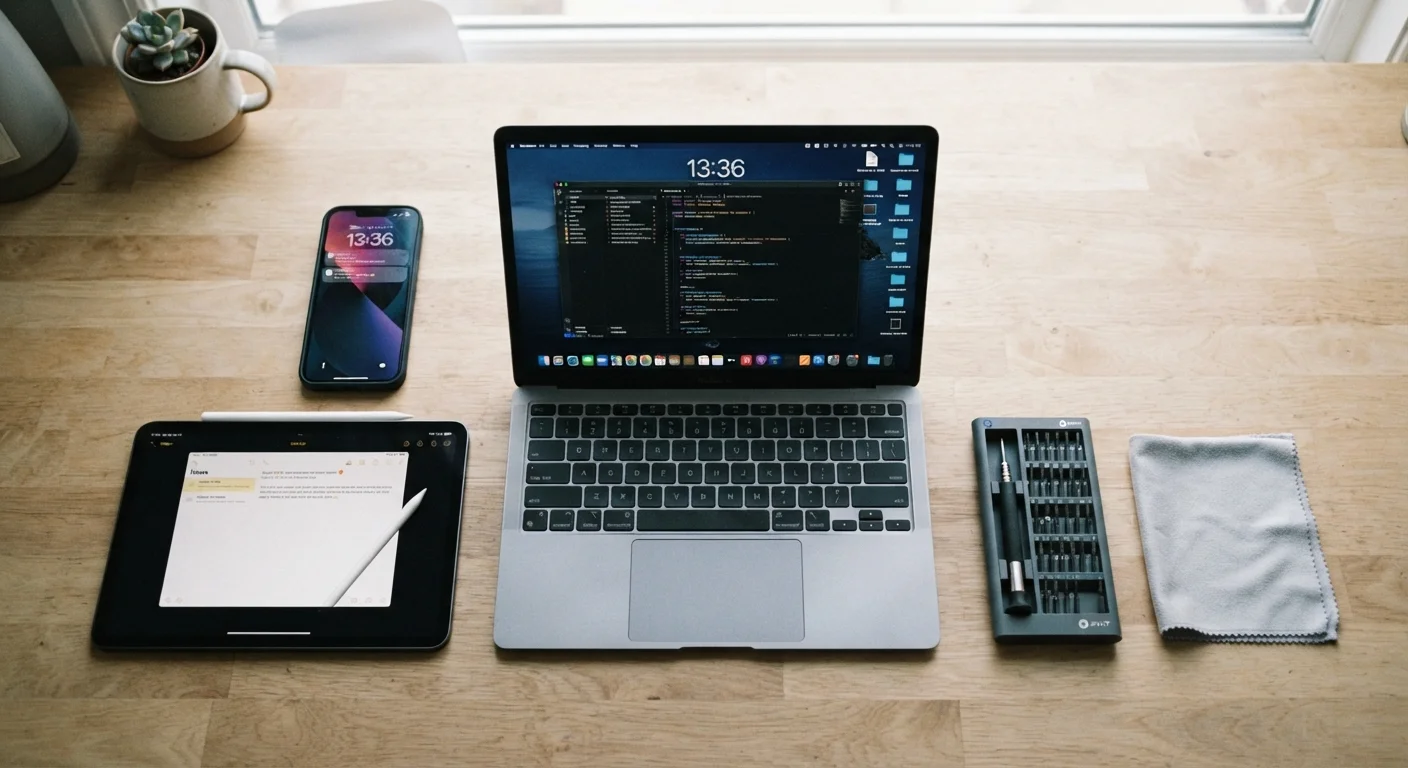
Most households replace phones and laptops every two to four years, often because a device feels slow or the battery no longer lasts through the day. In many cases, those symptoms have fixable causes. The device itself still has functional hardware, but accumulated software clutter, battery misuse, or physical wear has shortened what it can do.
Replacing a working device is expensive in ways that go beyond the sticker price. Our article on hidden costs families miss when budgeting for new tech covers the subscription fees, accessories, and data plans that stack on top of any new purchase. Extending a device's useful life by even one year avoids all of those costs entirely.
The practices below apply to phones, tablets, and laptops running any major operating system. None require technical skill or special equipment.
Software and updates
Software is the part of a device most people ignore after the initial setup. Over time, apps accumulate, background processes multiply, and the operating system itself may be running versions with known performance bugs that later updates fixed.
Install software and security updates as soon as they are available.
Operating system updates often include performance improvements and memory management fixes, not just security patches. Skipping them lets bugs accumulate and can leave the device running older, less efficient code.
Keep battery charge between 20% and 80% as a general routine.
Lithium-ion batteries degrade faster when routinely charged to 100% and drained near 0%. Staying in the mid-range reduces chemical stress on the cells and preserves capacity over hundreds of charge cycles.
Clear out unused apps, large files, and cached data regularly.
Devices with less than 10-15% free storage often slow down because the operating system cannot manage temporary files and virtual memory efficiently. Removing what you no longer use gives the system room to work.
Avoid exposing devices to sustained heat, including leaving them in a car or in direct sunlight.
Heat is one of the main causes of accelerated battery and component wear. A device that runs hot regularly will lose battery capacity faster and may experience processor throttling to protect itself.
Use a case and screen protector from the start, and replace them when worn.
Physical damage, particularly cracked screens and bent chassis, often ends a device's useful life before any internal component fails. Protection costs a fraction of a repair and far less than a replacement.
Restart devices on a regular schedule rather than leaving them in sleep mode indefinitely.
A full restart clears cached processes, resets network connections, and frees memory that background apps accumulate over days of continuous use. Many intermittent performance complaints resolve after a simple restart.
If a device still feels slow after updates and storage cleanup, check whether the manufacturer still issues security updates for that model. Once a device falls off the support list, its software cannot keep up with current apps. That is a legitimate reason to consider replacement, and our upgrade checklist can help you decide whether that moment has actually arrived.
Physical care and environment
Hardware damage is permanent in a way that software problems are not. A cracked screen or a battery destroyed by heat cannot be fixed with an update. These are also the failure modes most within a household's control.
When a repair may not be worth it
Some repairs cost more than the device's remaining useful value. Before paying for a screen replacement or battery swap, get a written estimate and compare it to what a comparable replacement would cost. A repair is generally worth it when the cost is less than half the price of an equivalent used or refurbished device in good condition. If the device no longer receives security updates from the manufacturer, that is also worth factoring in.
Beyond cases and screen protectors, consider where devices are stored and used. Charging a phone overnight under a pillow, running a laptop on carpet, or leaving a tablet in a hot car are common habits that shorten device life without any obvious immediate consequence. Heat, in particular, affects battery chemistry in ways that compound over months.
For context on how everyday habits affect household costs in aggregate, see simple habits that quietly drain your household budget. The same compounding logic applies to tech.
Quick actions you can take today
Maintenance does not require a scheduled project. Most of the actions that extend device life take a few minutes and can be done during an ordinary evening at home.
If you are unsure whether your current device is worth maintaining or has reached the point where replacement makes more financial sense, the before you upgrade checklist walks through the evaluation in a structured way.
The content provided on our blog site traverses numerous categories, offering readers valuable and practical information. Readers can use the editorial team’s research and data to gain more insights into their topics of interest. However, they are requested not to treat the articles as conclusive. The website team cannot be held responsible for differences in data or inaccuracies found across other platforms. Please also note that the site might also miss out on various schemes and offers available that the readers may find more beneficial than the ones we cover.