

Documents and entry requirements
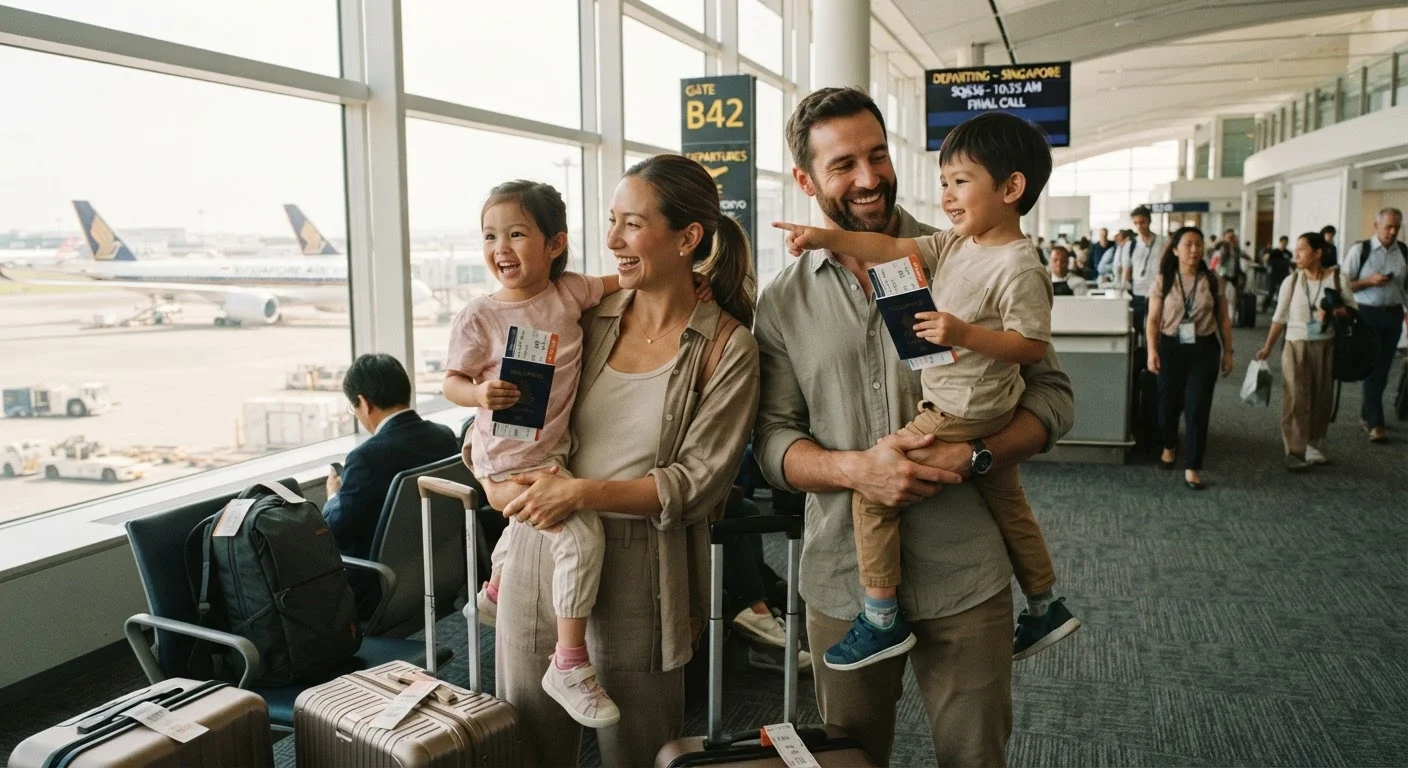
Every child traveling internationally needs a valid U.S. passport. For minors under 16, both parents or legal guardians must appear in person at a passport acceptance facility and present consent. If one parent cannot attend, a signed, notarized Form DS-3053 (Statement of Consent) is required. Processing times vary, so apply at least three months before departure. Expedited processing is available for an additional fee.
Visa requirements depend entirely on the destination. The U.S. Department of State's travel website lists current entry requirements by country, including whether Americans can enter visa-free and for how long. Some countries also require proof of onward travel or sufficient funds at the border. Children are not exempt from these rules.
If you are traveling without one parent or as a single parent, carry a notarized letter from the absent parent authorizing the trip. Some countries will deny entry to minors without this documentation. Verify requirements directly with the destination country's embassy or consulate before you book.
Entry rules, visa requirements, and travel advisories can change. Always verify current requirements through official government sources, including travel.state.gov and the destination country's official immigration authority, before finalizing any travel plans.
Apply for passports
Gather required documents for each family member: Form DS-11 for minors, proof of U.S. citizenship, a government-issued ID for the applying parent or guardian, one passport photo per person, and the application fee. Both parents or guardians must appear in person for children under 16. Submit at a post office or passport agency that accepts passport applications.
Research entry requirements for your destination
Visit travel.state.gov for the destination country's entry requirements. Note whether a visa is needed, the maximum length of stay, and any documentation required for minors traveling with one parent or with non-parental guardians. Contact the destination country's U.S. embassy or consulate if any requirement is unclear.
See a doctor or travel medicine clinic
Book a pre-travel health visit for all children. Bring a list of the destination country, planned activities, and the trip duration. The provider will advise on required and recommended vaccines, malaria prophylaxis if applicable, and any other health precautions. Get documentation of any administered vaccines to carry with you.
Set up your travel money
Notify your bank and credit card providers of your travel dates and destination. Identify your lowest-fee card for foreign purchases. Withdraw a small amount of local currency before departure or plan to use an ATM immediately after arriving. Set a daily spending target for the trip using your total trip budget divided by the number of days.
Pack strategically
Lay out everything you plan to pack, then remove one-third of it. Use a packing list for each family member. Confirm what your airline allows in carry-on and checked bags, including any restrictions on liquids and medications. Pack medications, documents, and one change of clothes per person in carry-on bags in case checked luggage is delayed.
Prepare kids for the trip
Talk to children about what to expect: time zone differences, unfamiliar food, language barriers, and long travel days. For younger children, a simple visual itinerary helps reduce anxiety. Discuss what to do if separated in a crowd, and make sure older children know the name of your accommodation and a contact number.
Health preparation and travel insurance
Schedule a visit with your family's doctor or a travel medicine clinic at least six to eight weeks before departure. Some destinations require or strongly recommend vaccines that take time to complete, and your pediatrician may need to update standard immunizations depending on where you are going.
Pack a child-specific travel health kit: fever reducer appropriate for each child's weight, oral rehydration salts, any prescription medications with a copy of the prescription, and a basic first aid kit. Check that any liquid medications meet airline carry-on volume rules or pack them in checked luggage with documentation.
Travel insurance that covers medical evacuation is worth serious consideration for international trips with children. Standard U.S. health insurance typically does not cover care abroad, and out-of-pocket pediatric costs in foreign hospitals can be substantial. Read the policy carefully to understand what is and is not covered before purchasing.
Keep a digital copy of every document
Email yourself scans of all passports, visas, insurance cards, vaccine records, and any consent letters before you leave. Store them in a cloud folder accessible from your phone. If documents are lost or stolen abroad, having digital copies speeds up the replacement process considerably.
Managing money across borders
ATMs abroad generally offer competitive exchange rates, but your home bank may charge a foreign transaction fee and the foreign ATM may add its own fee on top. Before you leave, check whether your bank refunds ATM fees internationally or whether you should open a travel-friendly account. Carrying a debit or credit card with no foreign transaction fee is practical for larger purchases.
Arrive with a small amount of local currency for immediate needs: transport from the airport, tips, or small vendors that do not accept cards. Currency exchange at U.S. airports before departure typically carries high fees. Exchanging at a bank before you travel or using an ATM after arrival is usually more cost-effective.
For families traveling on a budget, understanding the local cost of living helps with daily spending targets. A country where your dollar stretches further allows more flexibility, but do not let favorable exchange rates encourage spending beyond the trip budget. Planning your overall trip budget before you get there prevents overspending once you are immersed in a new place.
Packing for children without overpacking
The most common packing mistake on a first international trip with kids is bringing too much. Checked bag fees on international routes add up quickly for a family, and dragging heavy luggage through foreign train stations or up narrow hotel stairs is genuinely difficult.
A practical approach: check whether your accommodation has laundry access or if laundromats are accessible nearby. If so, three to four days of clothing per child is enough for a two-week trip. Roll clothes rather than fold them, and use packing cubes to keep each child's items separate.
Carry-on essentials for kids on long international flights include headphones, a few small toys or activities, snacks, a change of clothes, and any comfort items your child relies on. Put these in a bag the child can manage themselves, which reduces what you carry and gives them some ownership over the journey. See the pre-departure checklist for a complete rundown of what to prepare before you leave.
For accommodation decisions that affect how much you need to pack (kitchen access means fewer restaurant meals and less need for snack reserves), comparing vacation rentals and hotel rooms is worth doing early in the planning process.
The content provided on our blog site traverses numerous categories, offering readers valuable and practical information. Readers can use the editorial team’s research and data to gain more insights into their topics of interest. However, they are requested not to treat the articles as conclusive. The website team cannot be held responsible for differences in data or inaccuracies found across other platforms. Please also note that the site might also miss out on various schemes and offers available that the readers may find more beneficial than the ones we cover.