

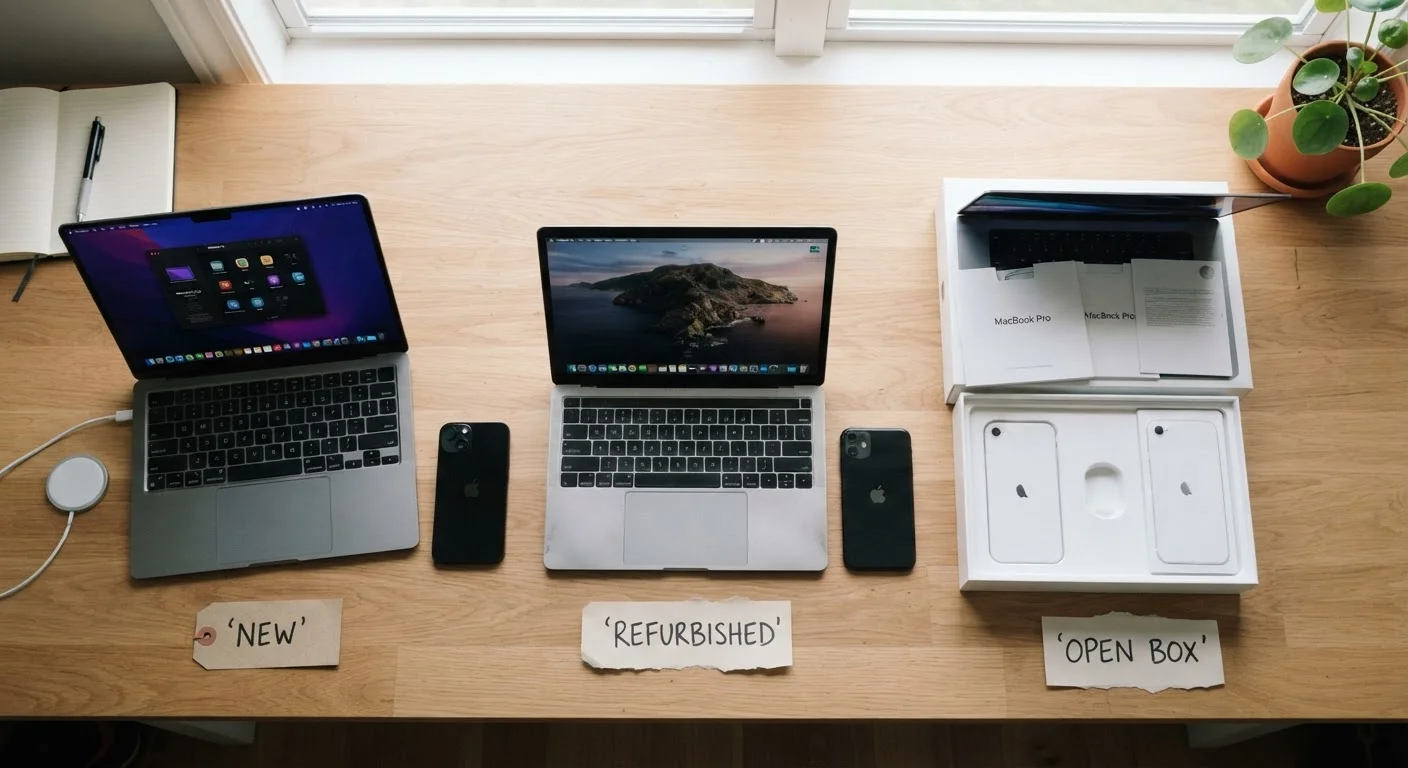
What 'new' actually means on an electronics label
A device sold as new has never been owned or activated. It ships in sealed original packaging with all accessories and carries a full manufacturer warranty. This is the straightforward end of the spectrum.
One variation worth knowing: new other is a label used by some retailers for devices that are functionally new but arrive in non-original or damaged packaging. The device itself may be untouched, but missing packaging can mean missing accessories, so verify the contents before completing a purchase.
Open-box is sometimes confused with new, but the two are different. An open-box item was purchased, the packaging was opened, and the device was returned, often without any use. Retailers test open-box returns and typically resell them at a discount with a shortened store warranty rather than a manufacturer warranty. The device may still be pristine, but the original warranty clock may have started running.
The spectrum of refurbished labels
Refurbished is not a single standard. Who performed the refurbishment determines how much confidence you can place in the label.
Manufacturer-certified or manufacturer-renewed
The device was returned to the original manufacturer, inspected, repaired to meet original specifications, and repackaged. These programs typically include a warranty (commonly 90 days to one year) and are the closest a refurbished device gets to new in terms of reliability assurance. The manufacturer sets the pass/fail criteria, so the bar is consistent.
Seller-certified or retailer-certified refurbished
A major retailer or authorized reseller performed the inspection and testing. The quality of this process varies by retailer. Some use rigorous standards comparable to manufacturer programs; others do not publish their criteria. A published return policy and a written warranty are good indicators that a seller has a defined process.
Third-party refurbished
An independent shop or seller refurbished the device. This category carries the widest quality range. Without a warranty or a clear description of what was inspected and replaced, the risk is higher. Some third-party refurbishers are skilled and transparent; others are not. A detailed condition description and a stated return window matter here more than anywhere else.
Check battery health before you commit
Cosmetic grade labels (A, B, C or Excellent, Good, Fair) describe scratches and scuffs on the outside. They say nothing about battery health, speaker condition, or whether internal components were replaced. Ask specifically about battery cycle count on laptops and phones when that information is not listed.
Cosmetic grade labels (A, B, C or Excellent, Good, Fair) describe scratches and scuffs on the outside. They say nothing about battery health, speaker condition, or whether internal components were replaced. Ask specifically about battery cycle count on laptops and phones when that information is not listed.
How to read condition grades
Many refurbished listings use letter or word grades to describe physical condition:
- Grade A / Like New / Excellent: minimal to no visible wear, often indistinguishable from new cosmetically.
- Grade B / Good: light scratches or scuffs visible under close inspection, fully functional.
- Grade C / Fair / Acceptable: noticeable cosmetic wear, may have deeper scratches or minor dents, still functional.
These grades are not standardized across the industry. A Grade B from one seller may look worse than a Grade B from another. Photos and detailed written descriptions are more reliable than the grade letter alone.
This same principle applies when comparing refurbished electronics to generic alternatives in other categories. Understanding how condition and brand tiers interact can help frame the tradeoff between paying less and accepting more variability.
Warranty and return policy: what to check before deciding
The presence and length of a warranty is the single most useful data point when comparing a refurbished device to a new one. A new device typically comes with a one-year manufacturer warranty. Certified refurbished devices commonly offer 90 days to one year. Third-party refurbished devices may offer no warranty at all.
A return window (14 to 30 days is standard) gives you time to test the device thoroughly. Check whether the seller covers return shipping, because that cost can offset part of the savings on a low-priced item.
Extended warranty plans sold by retailers are available for both new and certified refurbished devices. Whether one makes financial sense depends on the device price and the base warranty length. A device with a one-year base warranty may not need an extended plan; a device sold with only a 90-day warranty has a shorter coverage gap to consider.
90 days
Typical minimum warranty on certified refurbished devices
Many manufacturer-certified refurbished programs offer warranties ranging from 90 days to one year, depending on the device category and program terms.
10-30%
Common price discount for open-box vs. new
Open-box devices at major retailers are generally discounted in this range compared to sealed new units of the same model, though actual discounts vary by retailer and product.
Frequently Asked Questions
Not exactly. A used device is sold as-is without any inspection or testing guarantee. Certified refurbished devices have been inspected, tested, and often repaired to a defined standard, and they typically include a warranty. The original device may have been returned or previously owned, but the certification process adds a layer of quality control that a straight used sale does not.
There is no universal answer. Manufacturer-certified devices that pass functional testing can perform comparably to new ones for many years. However, older components (especially batteries) may degrade faster because they started with prior use. Battery health and component age are worth asking about before purchasing.
Open-box means a customer purchased the item, opened the packaging, and returned it. The device may have been used briefly or not at all. Retailers typically test open-box returns and sell them at a discount with a store warranty rather than the full manufacturer warranty.
No. Grade letters like A, B, and C, and terms like 'excellent' or 'good', are set by individual sellers and are not governed by any industry-wide standard. Always look at photos and written condition descriptions rather than relying solely on a grade label.
Generally, no. Software support (such as operating system updates) is tied to the device model and the manufacturer's support schedule, not the purchase condition. A refurbished phone or laptop receives the same software updates as a new one of the same model, for as long as the manufacturer supports that model.
Look for a clearly stated return window (at minimum 14 to 30 days), detailed photos showing all surfaces, and a specific description of what was tested and replaced. Without a warranty, your main recourse is the return window, so knowing its exact terms before purchasing matters.
The content provided on our blog site traverses numerous categories, offering readers valuable and practical information. Readers can use the editorial team’s research and data to gain more insights into their topics of interest. However, they are requested not to treat the articles as conclusive. The website team cannot be held responsible for differences in data or inaccuracies found across other platforms. Please also note that the site might also miss out on various schemes and offers available that the readers may find more beneficial than the ones we cover.